
The Arctic Meltdown: Understanding the Geopolitical Implications of Climate Change
By Eva Bauer 4 min read
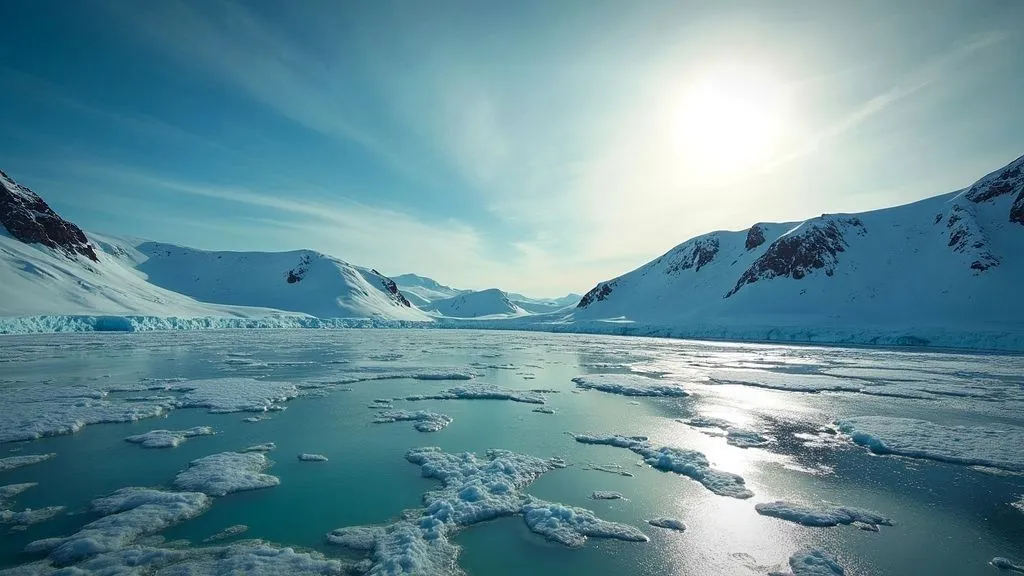
As the Arctic ice continues to melt at an alarming rate, the implications extend far beyond environmental concerns. This rapid change in the polar region is reshaping geopolitical dynamics, economic interests, and international relations. Countries are now vying for dominance over newly accessible resources and shipping routes, leading to a complex interplay of cooperation and conflict.
Melting Ice and Open Waters
The Arctic region has been warming twice as fast as the global average, with temperatures rising significantly since the early 2000s. The reduction of sea ice is not merely an environmental alarm; it changes the landscape of international shipping and resource extraction. For instance, the Northwest Passage, once deemed impassable, is becoming increasingly navigable. This new route could drastically shorten shipping times between Europe and Asia, making it an attractive option for global trade.
Increased accessibility to the Arctic also means that vital resources, such as oil, gas, and minerals, are becoming easier to extract. Estimates suggest that about 13% of the world's undiscovered oil and 30% of undiscovered natural gas lie beneath the Arctic sea floor. This potential wealth has caught the attention of several nations, each keen on claiming their share.
Territorial Claims and International Law
The melting ice has sparked disputes over territorial claims in the Arctic. The United Nations Convention on the Law of the Sea (UNCLOS) allows countries to extend their continental shelf claims up to 200 nautical miles from their coastlines, with the possibility of extending beyond that based on geological evidence. As nations like Russia, Canada, and the United States submit competing claims, tensions are rising.
Russia, in particular, has been proactive in asserting its dominance. The Kremlin has increased its military presence in the Arctic, conducting numerous exercises and expanding infrastructure in the region. This militarization raises concerns among neighboring countries and underscores the potential for conflict over territories that are becoming increasingly important due to climate change.
Environmental Consequences and Global Impact
While the geopolitical implications are significant, the environmental consequences of Arctic melting cannot be overlooked. The loss of ice contributes to rising sea levels globally, affecting coastal communities and ecosystems far from the polar regions. Furthermore, the thawing permafrost releases large amounts of greenhouse gases, primarily methane, which exacerbates climate change.
The changes in the Arctic also have profound effects on global weather patterns. Scientists have observed shifts in jet streams and extreme weather events that can be traced back to changes in the polar regions. These phenomena illustrate the interconnectedness of climate systems and the far-reaching consequences of Arctic warming.
Economic Opportunities and Environmental Risks
As nations scramble for Arctic resources, the tug-of-war between economic opportunity and environmental protection intensifies. On one hand, increased resource extraction can boost national economies. On the other hand, the risks of oil spills, habitat destruction, and increased greenhouse gas emissions pose serious threats to the fragile Arctic ecosystem.
Efforts to balance these conflicting interests are ongoing. Some countries advocate for sustainable practices and environmental stewardship, while others prioritize immediate economic gain. The debate is complex and involves multiple stakeholders, from indigenous communities to multinational corporations.
Indigenous Peoples and Climate Change
Indigenous peoples in the Arctic are among the most affected by climate change. Their traditional ways of life, which depend on stable ice conditions and predictable weather patterns, are rapidly being undermined. As the ice melts, hunting and fishing grounds are altered, threatening food security and cultural heritage.
Indigenous voices are crucial in discussions about Arctic policy and resource management. Many are calling for the recognition of their rights and the inclusion of traditional ecological knowledge in decision-making processes. Their perspectives can provide valuable insights into sustainable practices that align with environmental preservation.
International Cooperation and Challenges
Despite the potential for conflict, there are also avenues for international cooperation in the Arctic. The Arctic Council, comprising eight Arctic states, focuses on fostering collaboration on environmental protection and sustainable development. This platform has seen some success in addressing shared challenges, although geopolitical tensions often complicate discussions.
One of the significant challenges lies in balancing national interests with collective action. As competing claims and military posturing intensify, building consensus on cooperative strategies becomes increasingly difficult. The melting Arctic serves as both a crisis and an opportunity for nations to rethink their approaches to international relations and environmental stewardship.
The Role of Innovation and Technology
Innovation and technology play a critical role in addressing the challenges posed by climate change in the Arctic. Advances in renewable energy, such as wind and solar power, offer potential alternatives to fossil fuel extraction. Moreover, new monitoring technologies can help track environmental changes and improve responses to disasters.
Research and development in climate science are essential for understanding the complex systems at play in the Arctic. Enhanced predictive models can aid policymakers in making informed decisions regarding resource management and conservation efforts. By investing in sustainable technologies, nations can work toward a future where economic activities do not come at the expense of the environment.